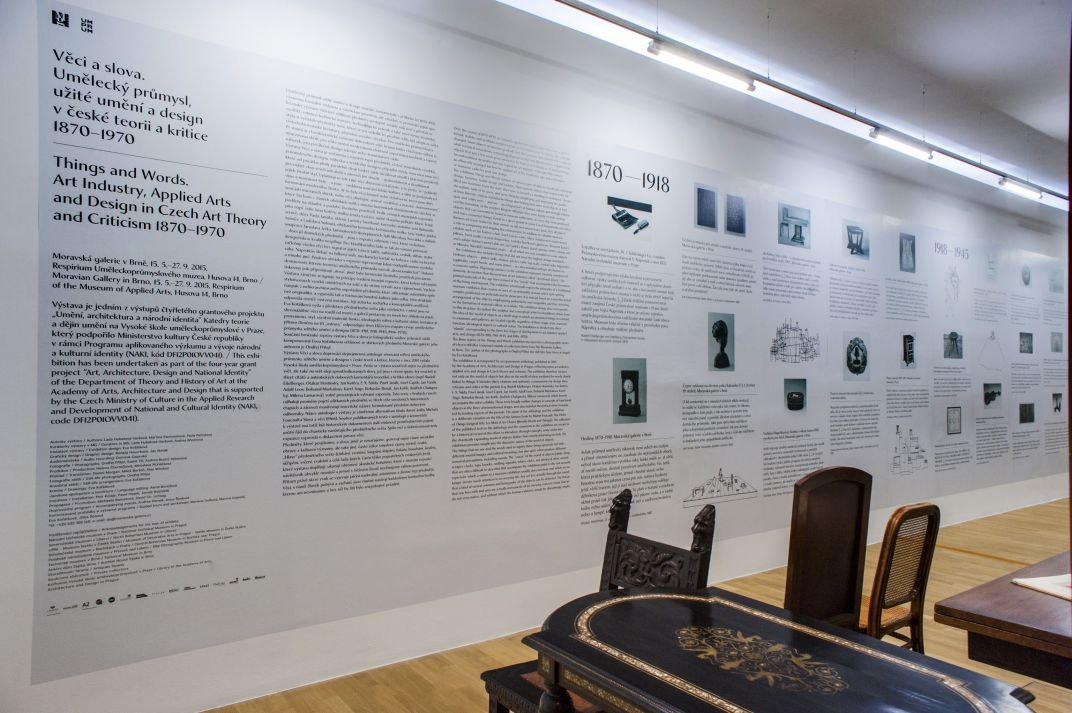
This exhibition has been undertaken as part of the four-year grant project "Art, Architecture, Design and National Identity" of the Department of Theory and History of Art at the Academy of Arts, Architecture and Design that is supported by the Czech Ministry of Culture in the Applied Research and Development of National and Cultural Identity (NAKI, code DF12P01OVV041).
Over the course of 1870-1970, art industry, applied arts and design underwent a distinct formal, stylistic and aesthetic transformation and its importance for society also radically changed. Some objects of function gradually lost their purpose and ceased to be produced, while technical innovations, technological progress and new lifestyle forms required new objects that just a few years prior seemed to be from a sci-fi utopia or of social privilege. An embroidered decorative fan was typical for art industry of the late 19th century, an efficiently arranged kitchen for applied art of the modernist age, and a television or transistor radio for post-war design.
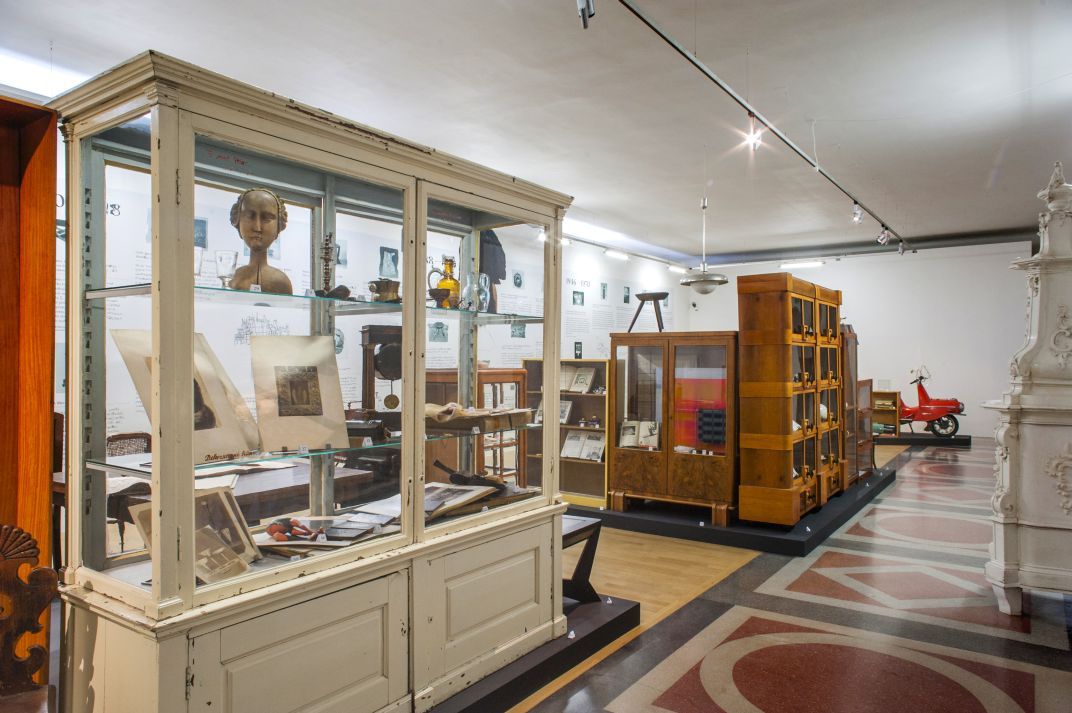
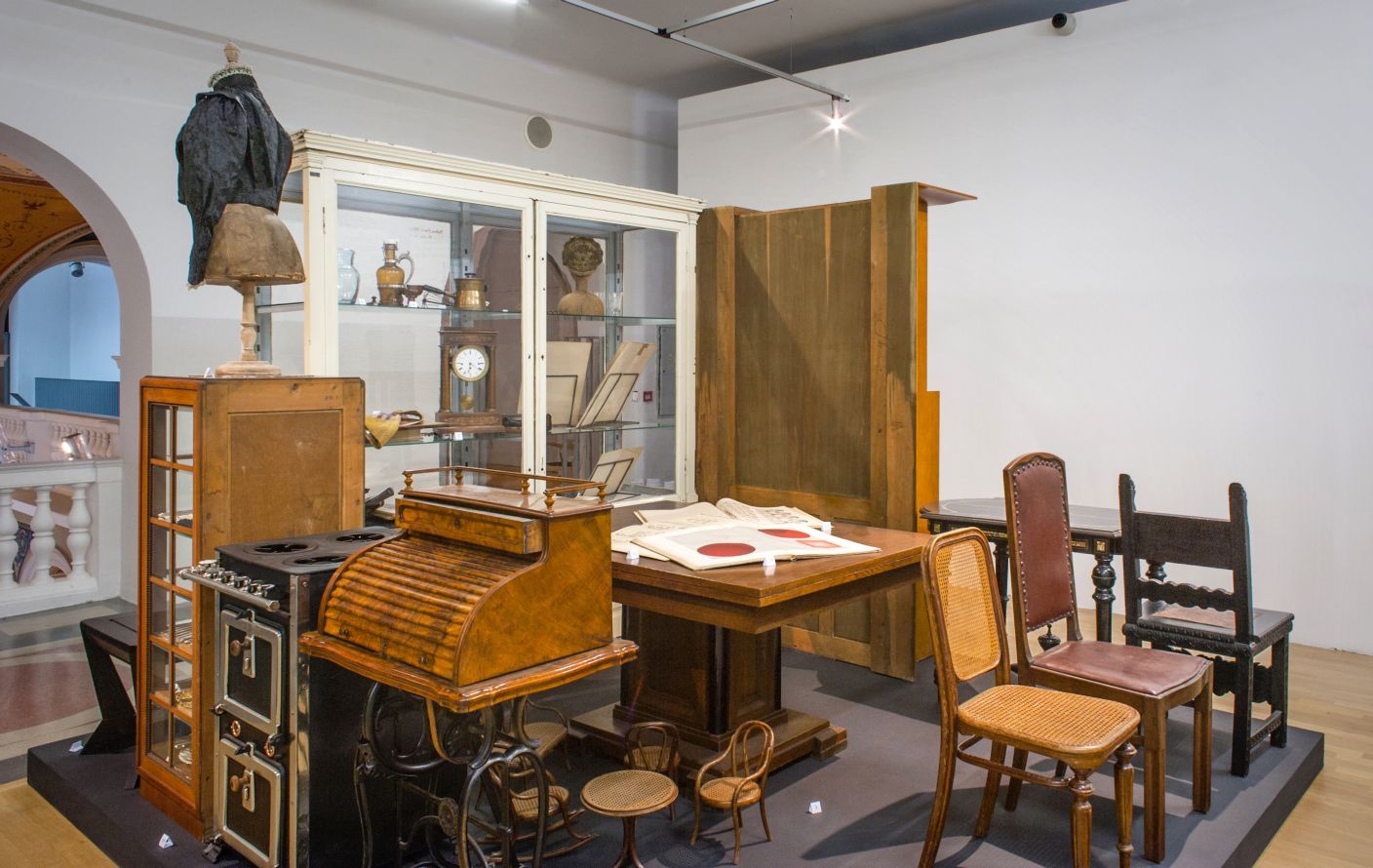
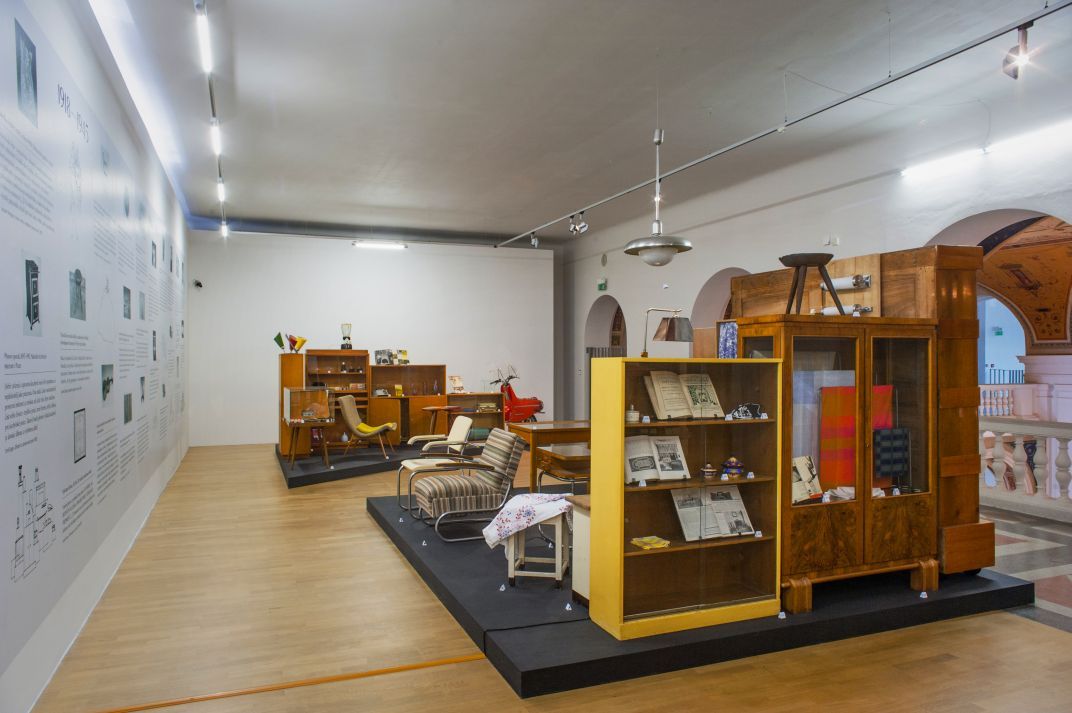
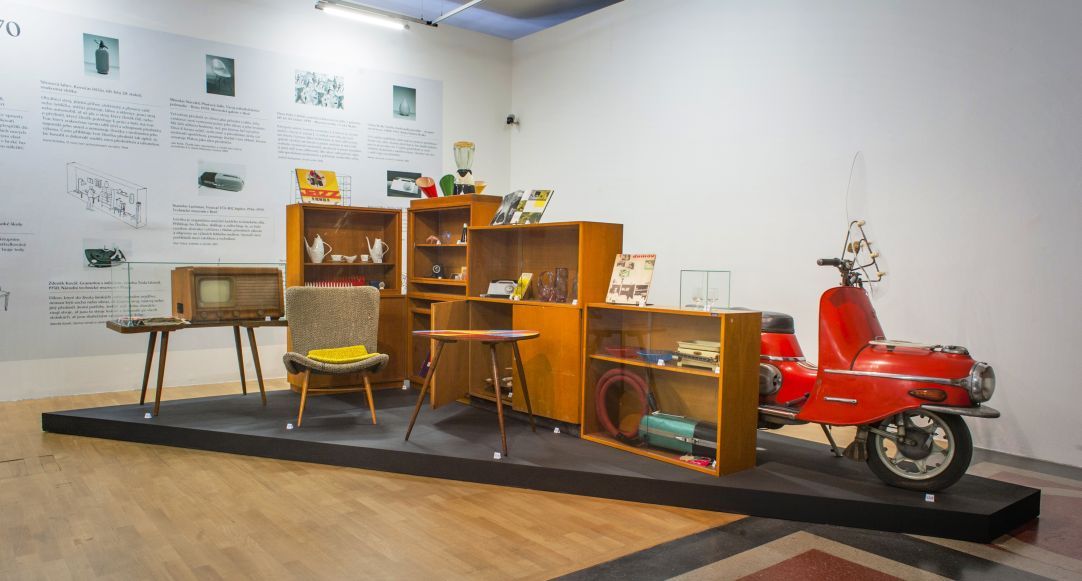
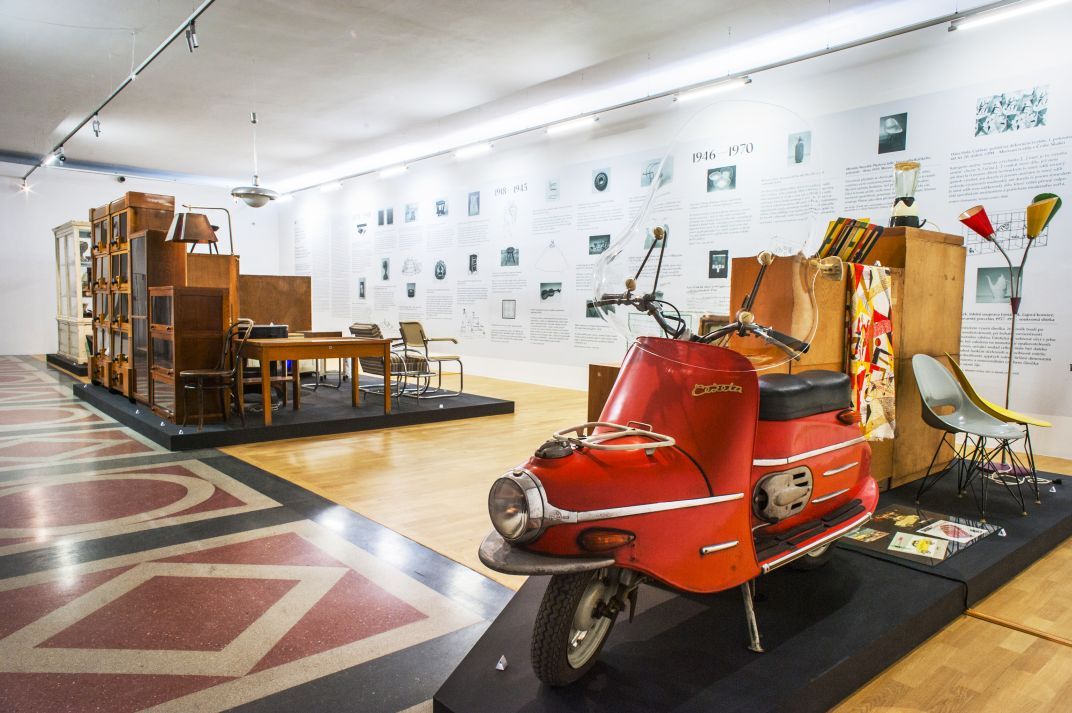
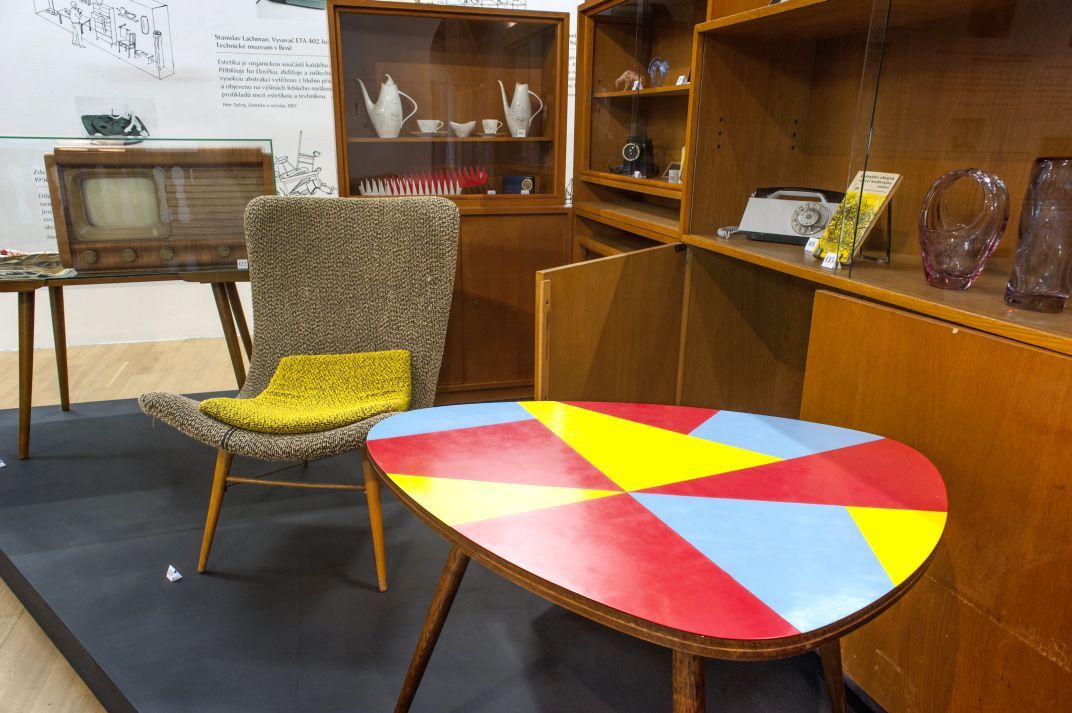
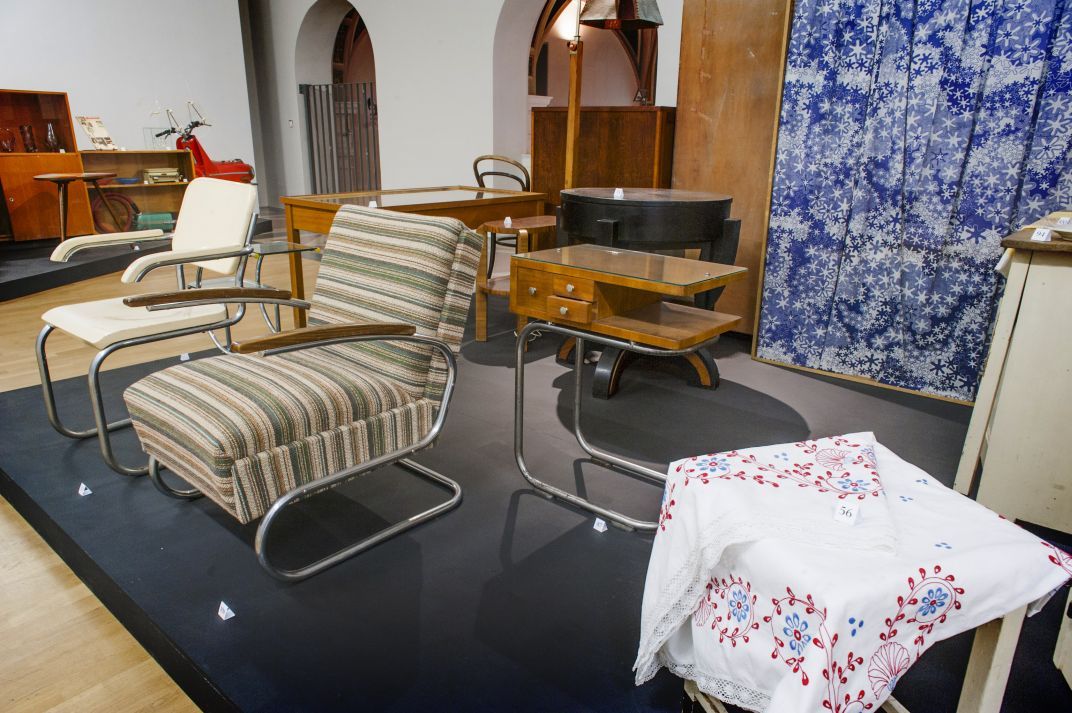
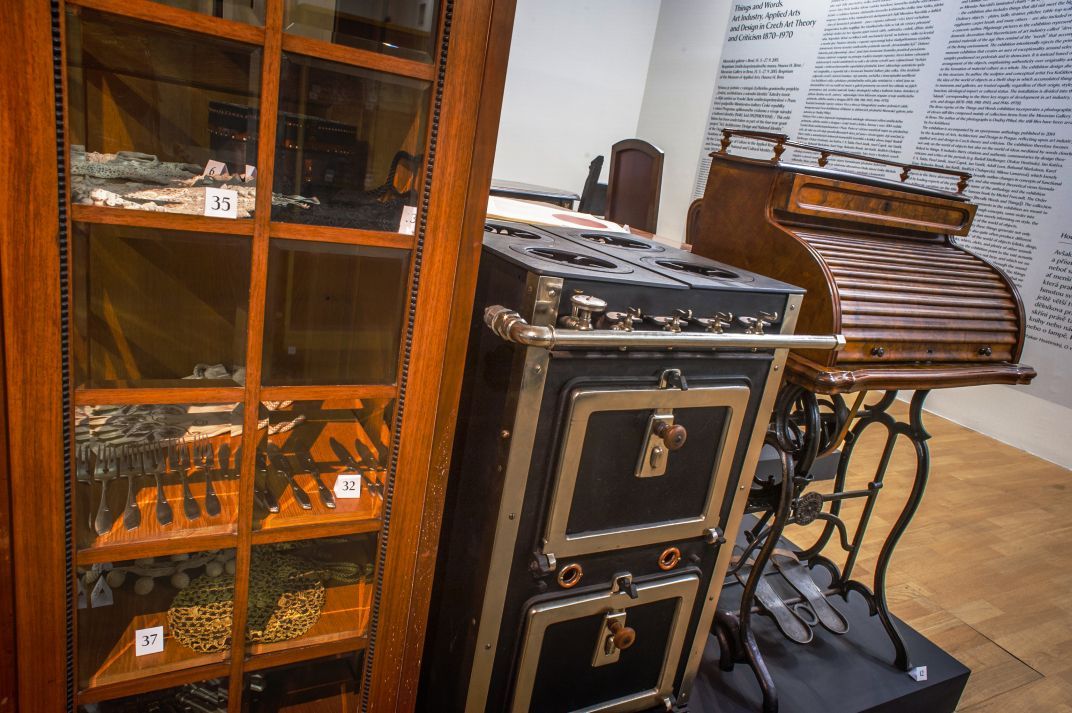
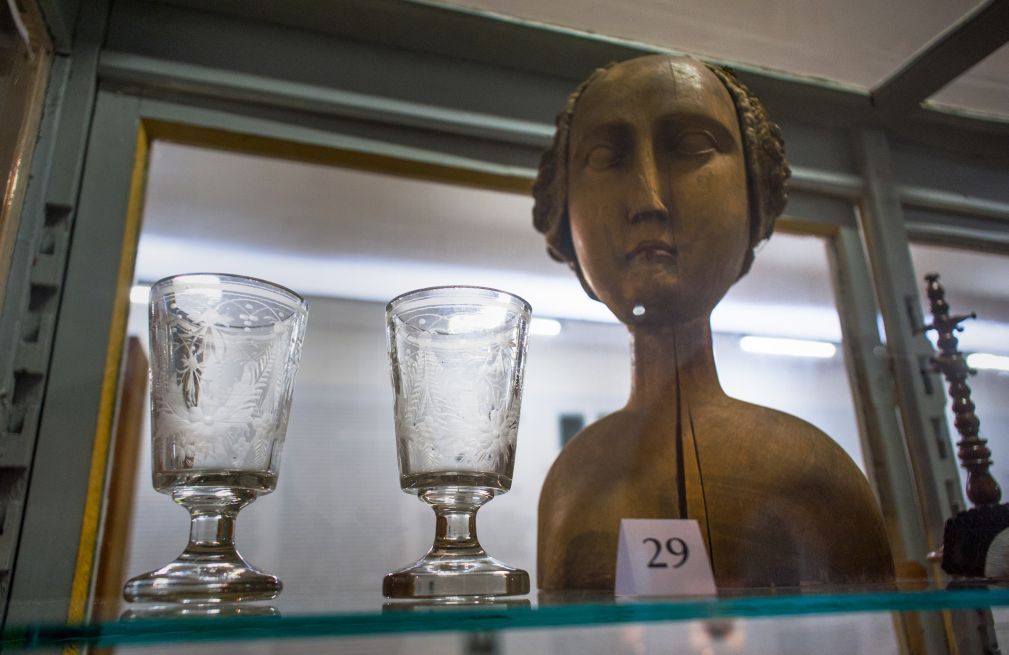
The exhibition Things and Words consists of various types of objects, handicraft, industrial design, furniture, textile design and fashion. These include objects that concurrently fulfilled two functions from the start: they were to beautify a dwelling or workspace, elevate the stylistic taste of its users, and serve them by simplifying and improving the quality of their lifestyle. Useless and kitschy things also belong here since even objects of bad taste and vanity were - and are - an integral part of human culture and strongly influenced the formation of the modern lifestyle. Whether they were luxury or style-setting objects that can currently be found in museum collections, or every day, mass produced and mass consumed things, found in a given period in many Czech households and often thrown out (even today) by their owners as old and unnecessary junk, they all played a role in composing and shaping the environment. In addition to valuable museum exhibits such as Jan Kotěra's chair, Josef Gočár's table, Marie Teinitzerová's hand-woven pillows, Pavel Janák's crystal-shaped box, Ludvika Smrčková's glassware, Ladislav Sutnar´s a Bohumil Južnič´s metal table set
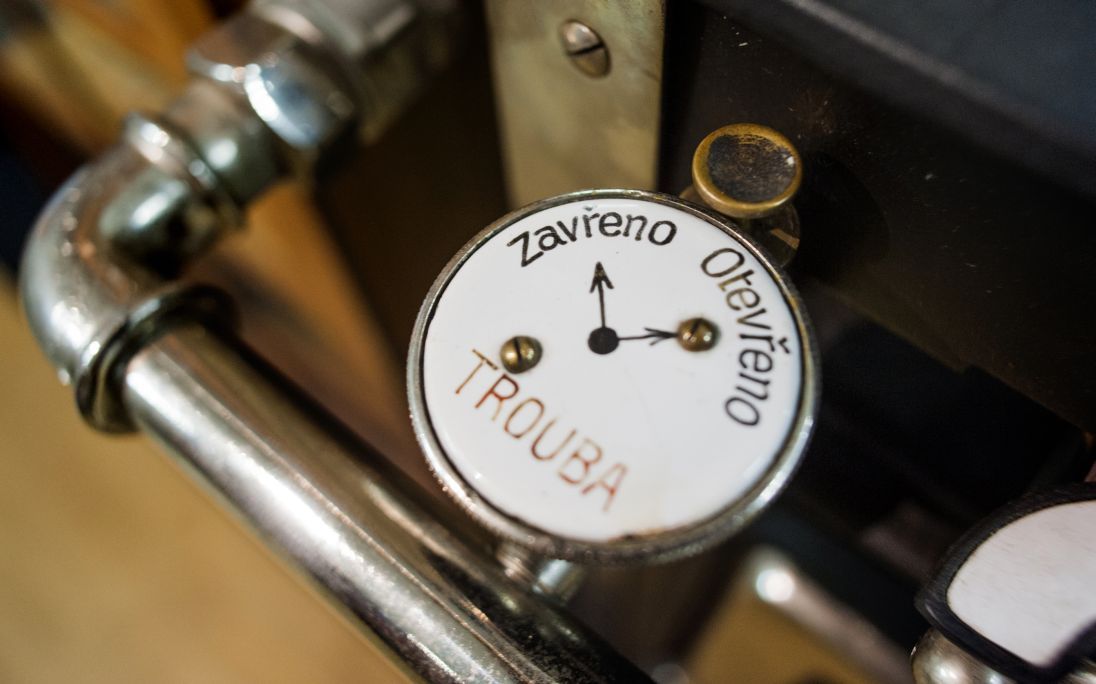
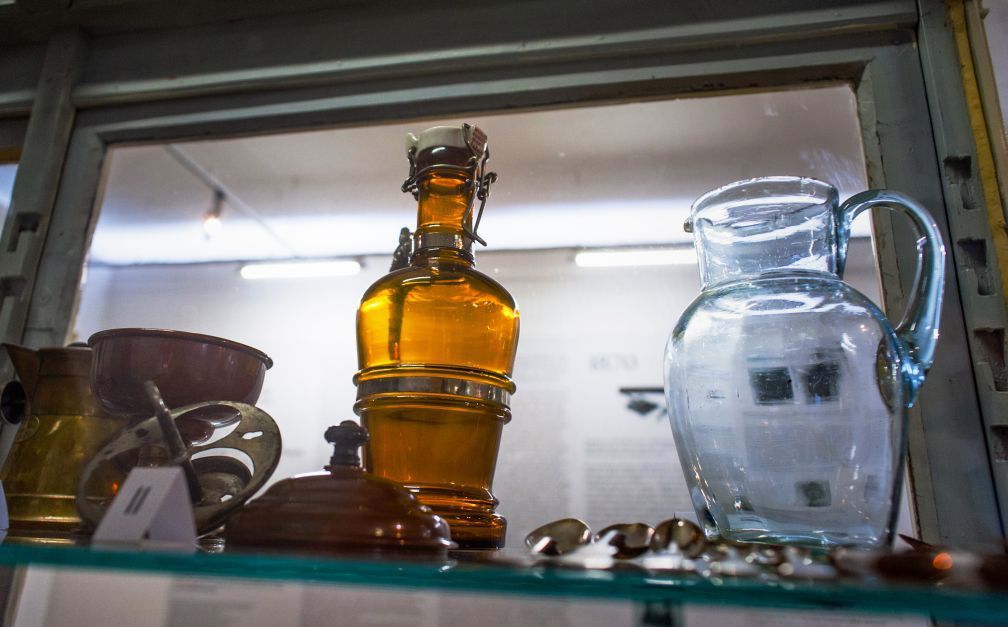
,Jan Vaněk´s flower stand, Jaroslav Ježek's dining sets or Miroslav Navrátil's laminated chairs - all of which are now considered iconic objects - the exhibition also includes things that did not meet the highest design standards. Ordinary objects - plates, ladle, strainer, pitcher, table-top scale, crystal radio, Náprstek's eggbeater, carpet brush, and many others - are also included without attribution to a concrete author. Pilgrimage pictures in the exhibition represent formerly omnipresent domestic decoration that theoreticians of art industry called "devotional kitsch." The printed materials of the age then remind of the "words" that accompanied the formation of the living environment. The exhibition intentionally rejects the principles of a traditional museum exhibition that creates an aura of exceptionality around select style-setting samples positioned on pedestals and in showcases. It is instead based on a non-hierarchal arrangement of the objects, emphasizing authenticity over originality and thus attesting to the formation of material culture as a whole. The exhibition design also corresponds to this structure. Its author, the sculptor and conceptual artist Eva Koťátková, draws from the idea of the world of objects as a thrift shop in which accumulated things, in contrast to museums and galleries, are treated equally, regardless of their origin, style, material, function, ideological import or cultural status. The installation is divided into three "islands" corresponding to the three key stages of development in art industry, applied arts, and design (1870-1918, 1918-1945, and 1946-1970).
The Brno exhibition Things and Words incorporates a photographic set of eleven still-lifes composed mainly of collection items from the Moravian Gallery in Brno. The author of the photographs is Ondřej Přibyl, the still-lifes have been arranged by Eva Koťátková.
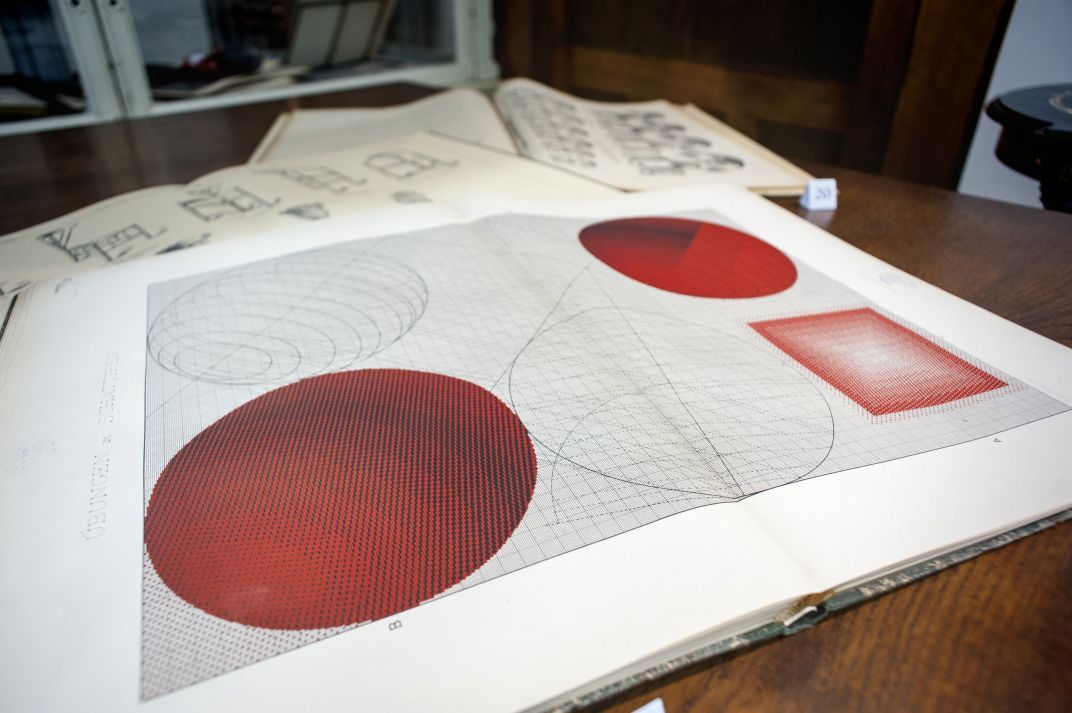
The exhibition is accompanied by an eponymous anthology, published in 2014 by the Academy of Arts, Architecture and Design in Prague, reflecting upon art industry, applied arts and design in Czech theory and criticism. The exhibition therefore focuses not only on the world of objects but also on the world of ideas mediated by words closely linked to things. It includes thirty citations and authentic commentaries by design theoreticians and critics of the periods (e.g. Rudolf Eitelberger, Otakar Hostinský, Jan Kotěra, F. X. Šalda, Pavel Janák, Josef Čapek, Jan Vaněk, Adolf Loos, Bohumil Markalous, Karel Teige, Bohuslav Brouk, Jan Kotík, Jindřich Chalupecký, Milena Lamarová), which loosely accompany the select exhibits. These texts broadly outline changes in concepts of functional objects in the three aforementioned stages, and also manifest theoretical views formulated by leading experts of the periods. The name of the anthology and the exhibition is a deliberate variation on the title of the famous book by Michel Foucault, The Order of Things (original title: Les Mots et les Choses). The collection of the published texts in the anthology and the comments in the exhibition are meant to be a historical record of the effort to introduce, through concepts, some order into the chaotically expanding worls of objects.
Rather than merely informing on style, the exhibition provides insight into the discursive nature of the world of objects.
The things that we use and the words used to signify these things generate not only different mental images and cultural meanings, but also quite often produce different sensorial perceptions, including sounds. The "voices" of the world of objects (clinks, dings, scrapes, clacks, taps, knocks, rustling, squeaks, whirrs, clicks, and plenty of other sounds that are often difficult to describe) that accompany the exhibition point to the vast acoustic repertoire which a visitor to a museum exhibition usually does not hear, and which we no longer devote much attention to in everyday life. Any yet it is actually through the sound that a kind of surreal animism and living pulse of the objects can be detected. The things that one lives with and uses are actually instruments of an everyday concrete music that we do not even notice, and without which the human existence would be disturbingly empty.